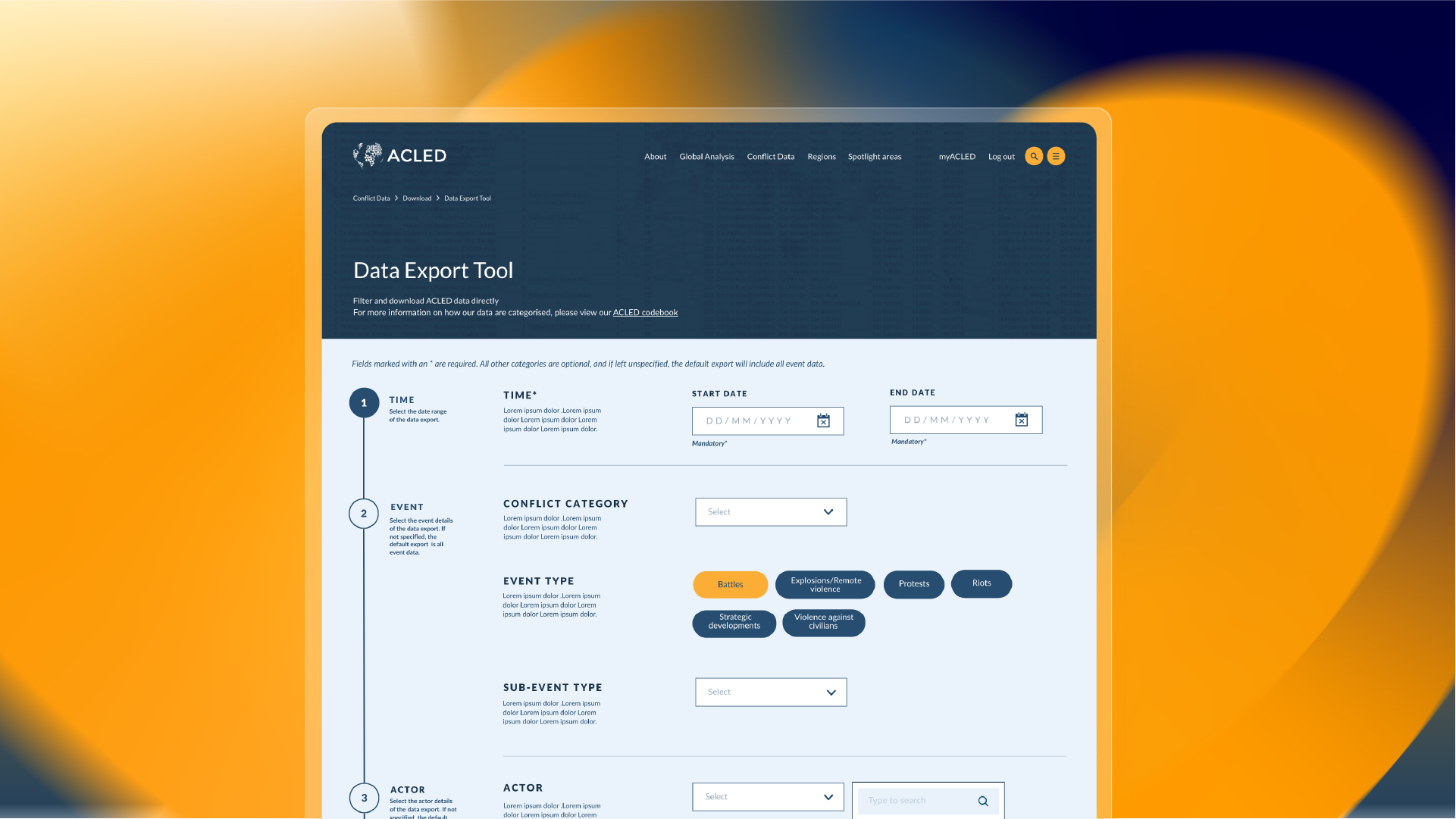
ACLED Data export tool (Temp)
Date: July 2025
Duration: 1 week
Role: UI Designer & UX Designer
Skills: UI Design, UX Design
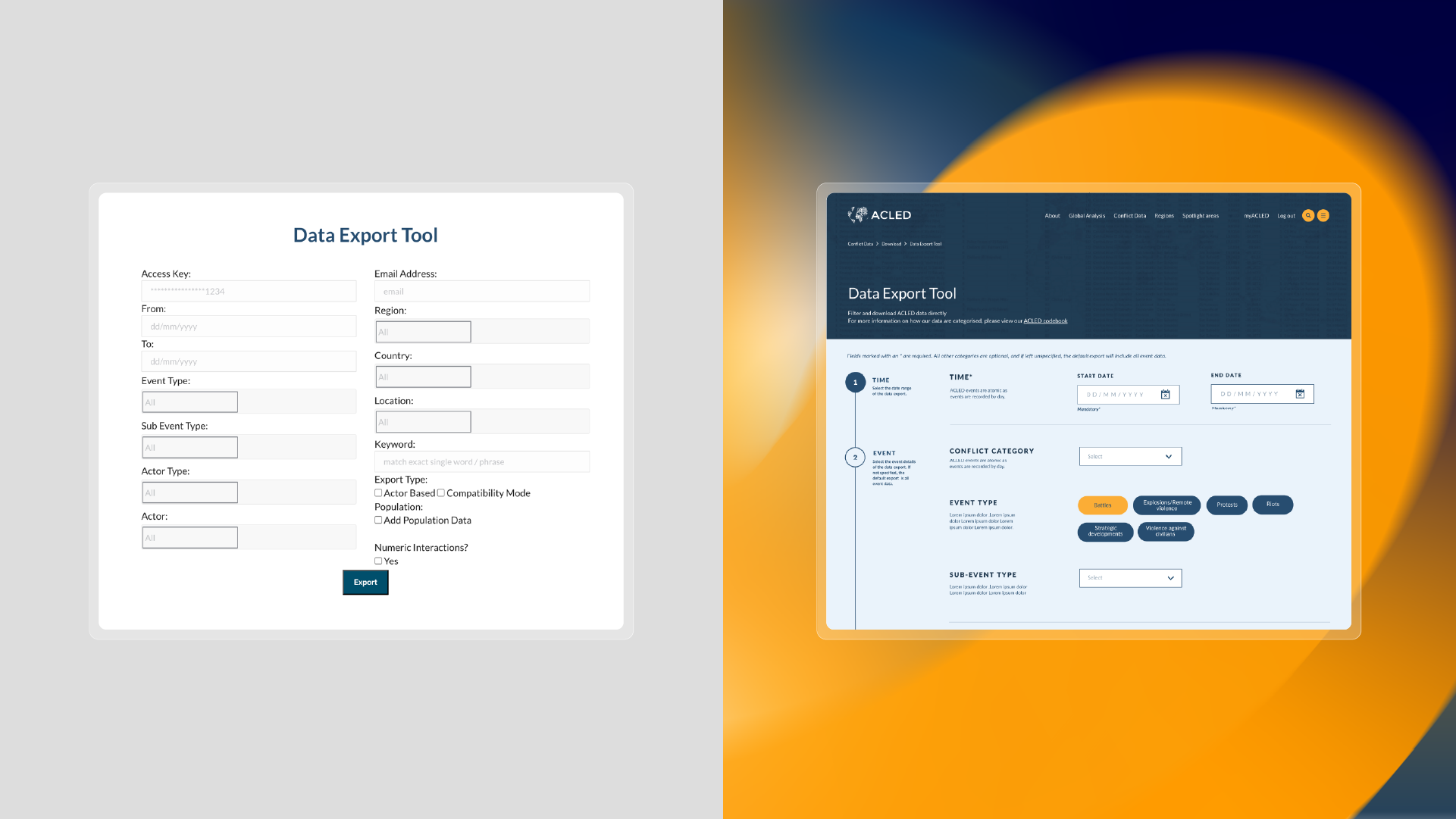
Initial design outputs for ACLED’s Data Export Tool did not adequately address internal requirements or provide sufficient clarity for a diverse global user base. I stepped in to redesign key features and act as a liaison between ACLED’s cross-functional teams and Soapbox, translating complex data requirements into user-centered UI solutions. This process resulted in three validated design iterations that improved usability, reduced cognitive load, and aligned stakeholder expectations, ultimately leading to a clear, agreed-upon design direction.
Background
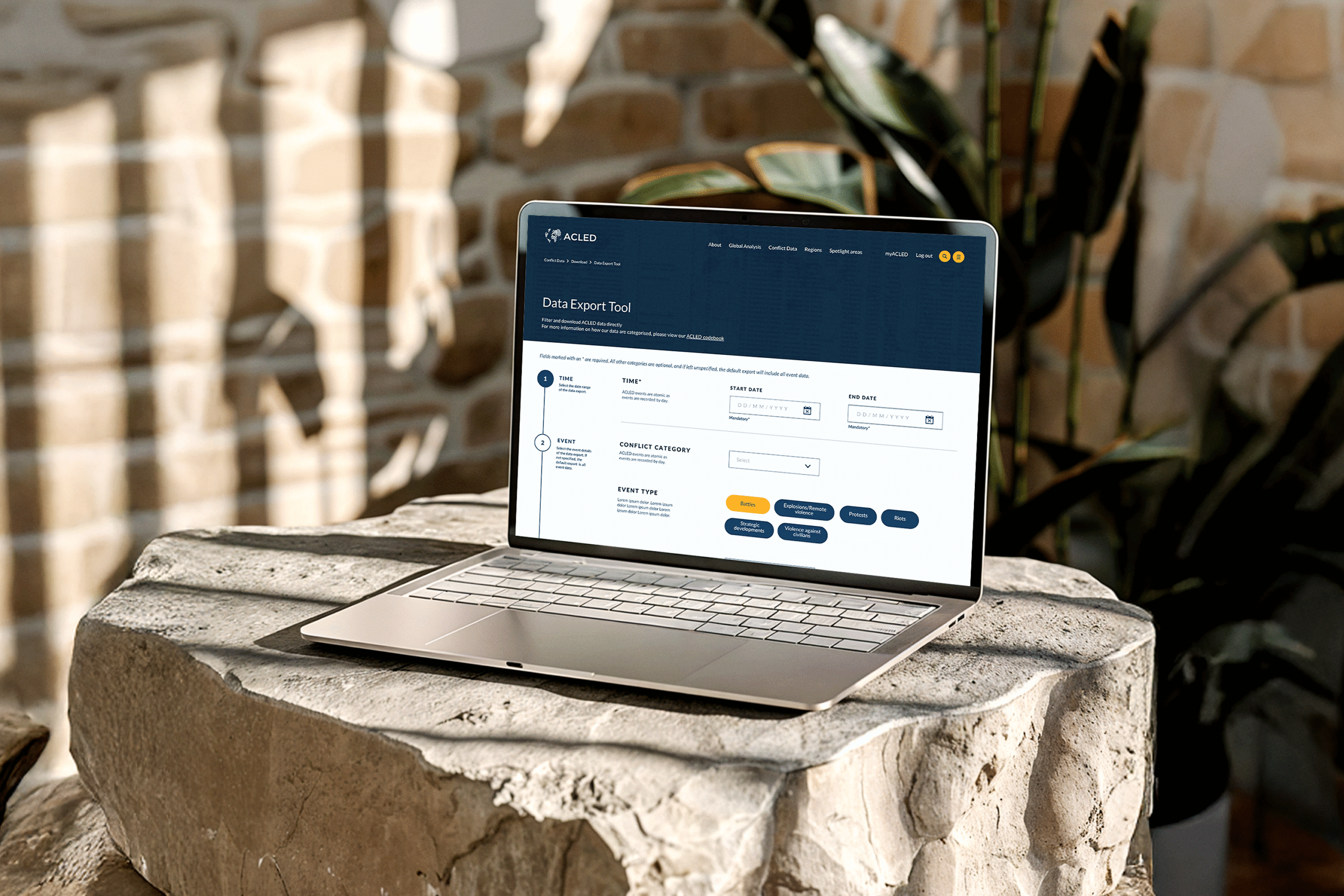
From April to August 2025, the multimedia team played a key role in supporting the web team to enhance the visual design and overall user experience of the ACLED website. This collaboration focused on translating complex data-driven products into intuitive, accessible, and visually coherent digital experiences for a diverse global audience. Drawing on my prior experience as a Junior Website Designer at Effector, I was entrusted with designing and refining several web pages that had been identified as requiring improvement. This responsibility required not only strong design execution, but also a deep understanding of user needs, accessibility considerations, and ACLED’s data-heavy offerings. One of the most significant contributions was the co-design of the Data Exporter Tool page, developed in direct collaboration with the company CEO. This process required clear communication, stakeholder management, and the ability to translate high-level strategic goals into practical design solutions. Through iterative discussions and feedback cycles, I helped shape a page that balances technical complexity with clarity, ensuring users can efficiently access and export data without being overwhelmed. The design approach was deliberately thoughtful and user-centred, accounting for the breadth of ACLED’s datasets and subscription products while maintaining ease of navigation and visual consistency with the wider site. Particular attention was paid to information hierarchy, content clarity, and interaction design, allowing both expert and non-expert users to engage with the platform effectively. This project highlights a range of skills, including multimedia design, UX/UI design, cross-team collaboration, and stakeholder engagement. It also demonstrates strengths in problem-solving, adaptability, and translating complex information into accessible digital formats. Working across teams and with senior leadership strengthened my communication skills and reinforced the importance of aligning design decisions with organisational goals and user needs.
The Challenge
The complexity of the previous interface posed a significant accessibility challenge. This created a barrier to entry for many users, particularly given ACLED’s wide and diverse user base. (The Data Export Tool is used by researchers, analysts, journalists, policymakers, and members of the public to select and download tailored subsets of conflict and political violence data). As a result, the tool in the new website needed to be intuitive, user-centered, and clearly communicate the steps required to successfully export data.

The Team
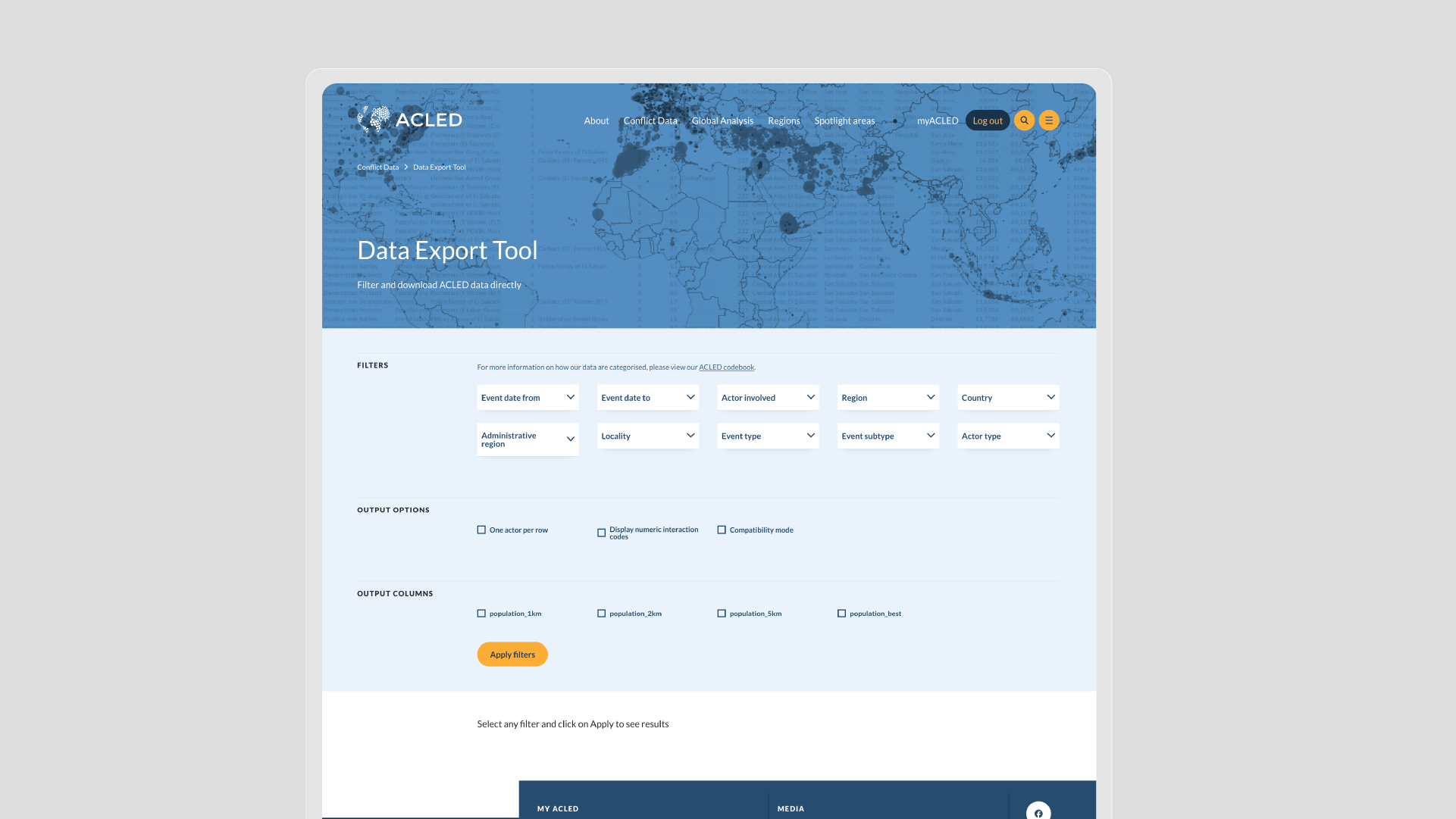
The team for this project comprised of the stakeholder, data, technology and multimedia team at ACLED as well as the correspondent cohort at Soapbox whom ACLED was working in conjuction with (in a consultancy capacity) to create the new website. Due to discrepancies with the initial design received from Soapbox, I was ushered in to redesign the required features and to mediate the output with both the ACLED and the Soapbox teams.
Marrying complex instruction with accesibility
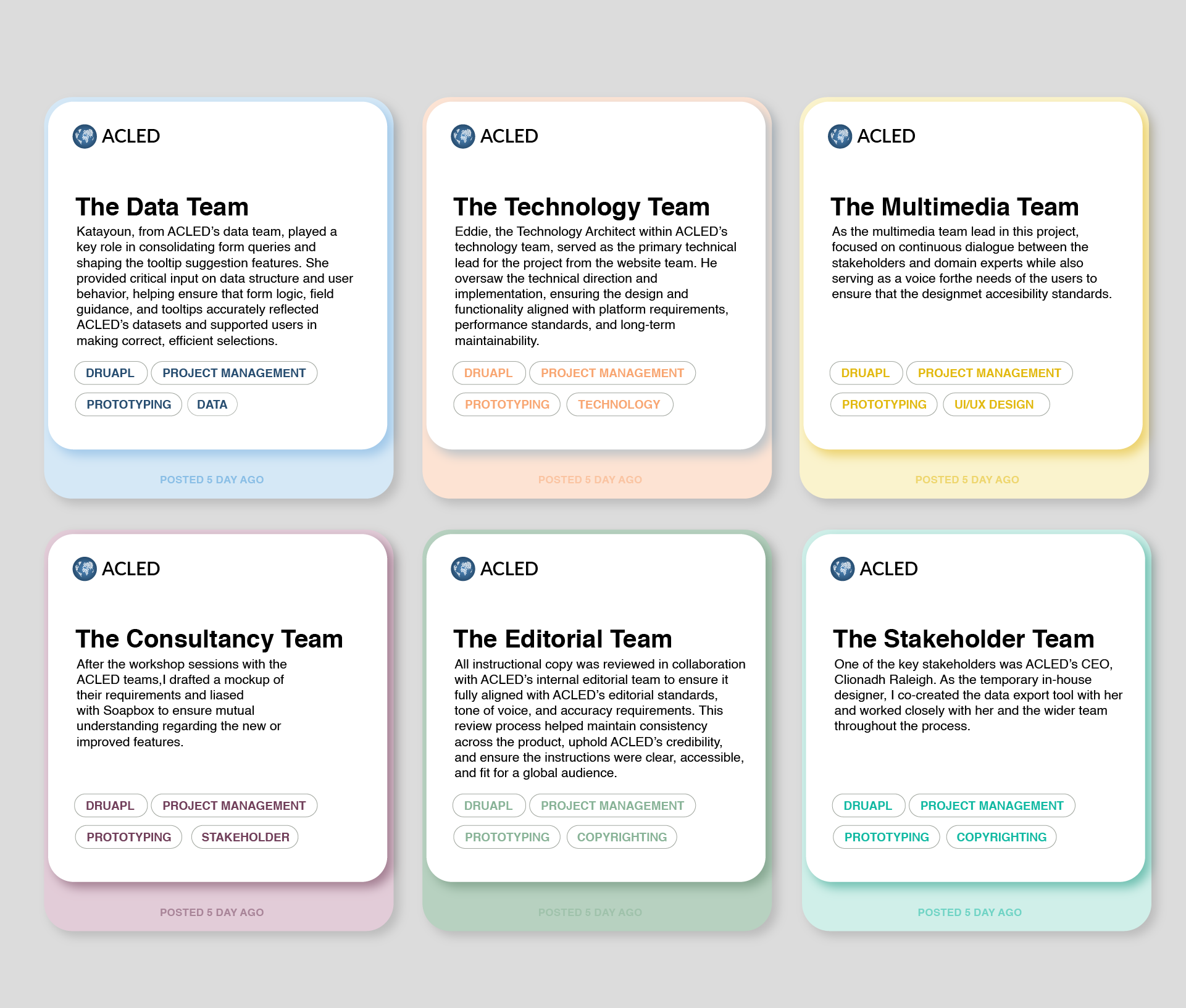
The ACLED team had clear requirements for what the form would show and the user needed clarity based on these prerequisites. As the UI/UX designer I needed to marry these two conditions to provide an experience that would satisfy all.
Iteration breakdown
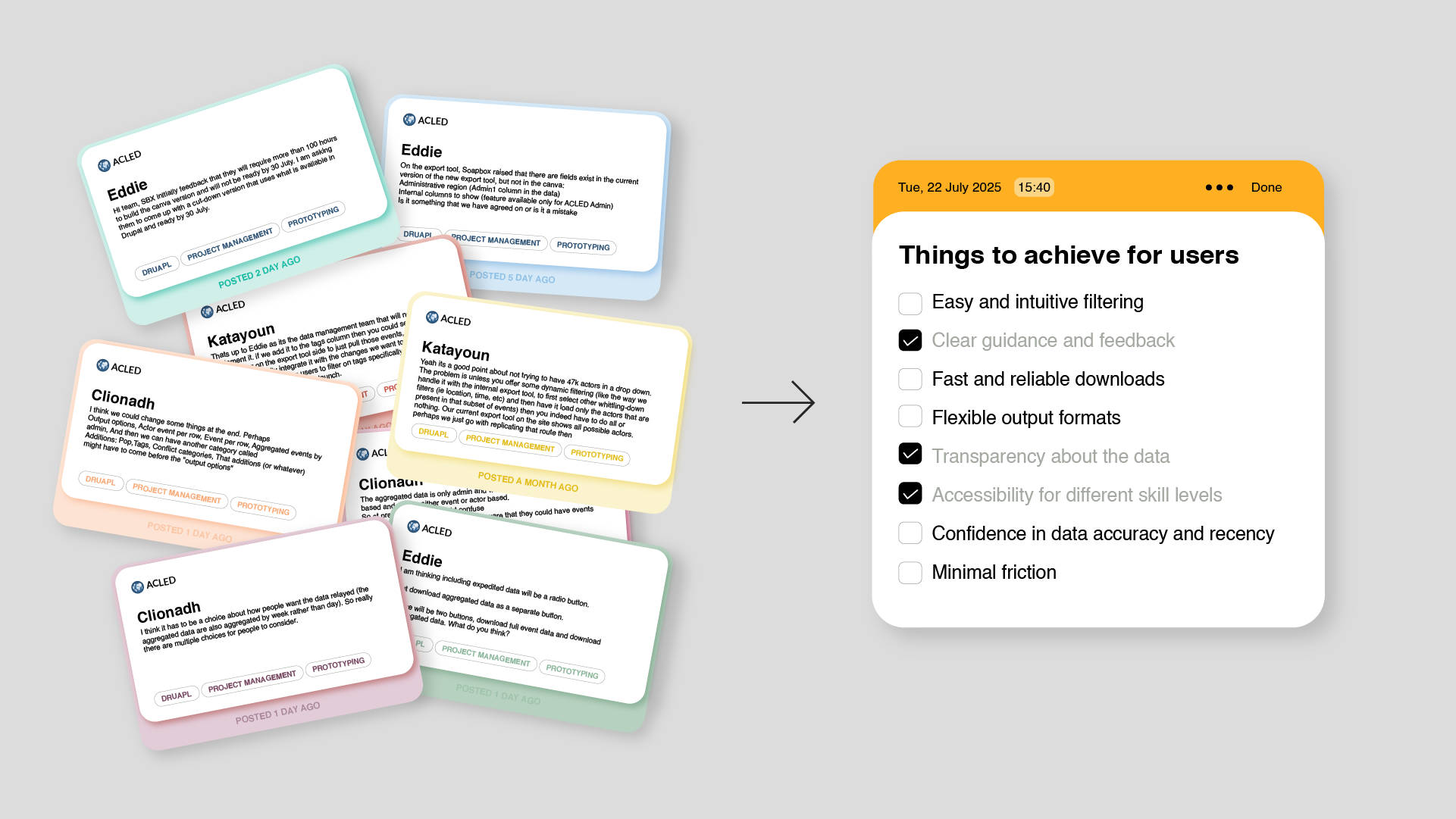
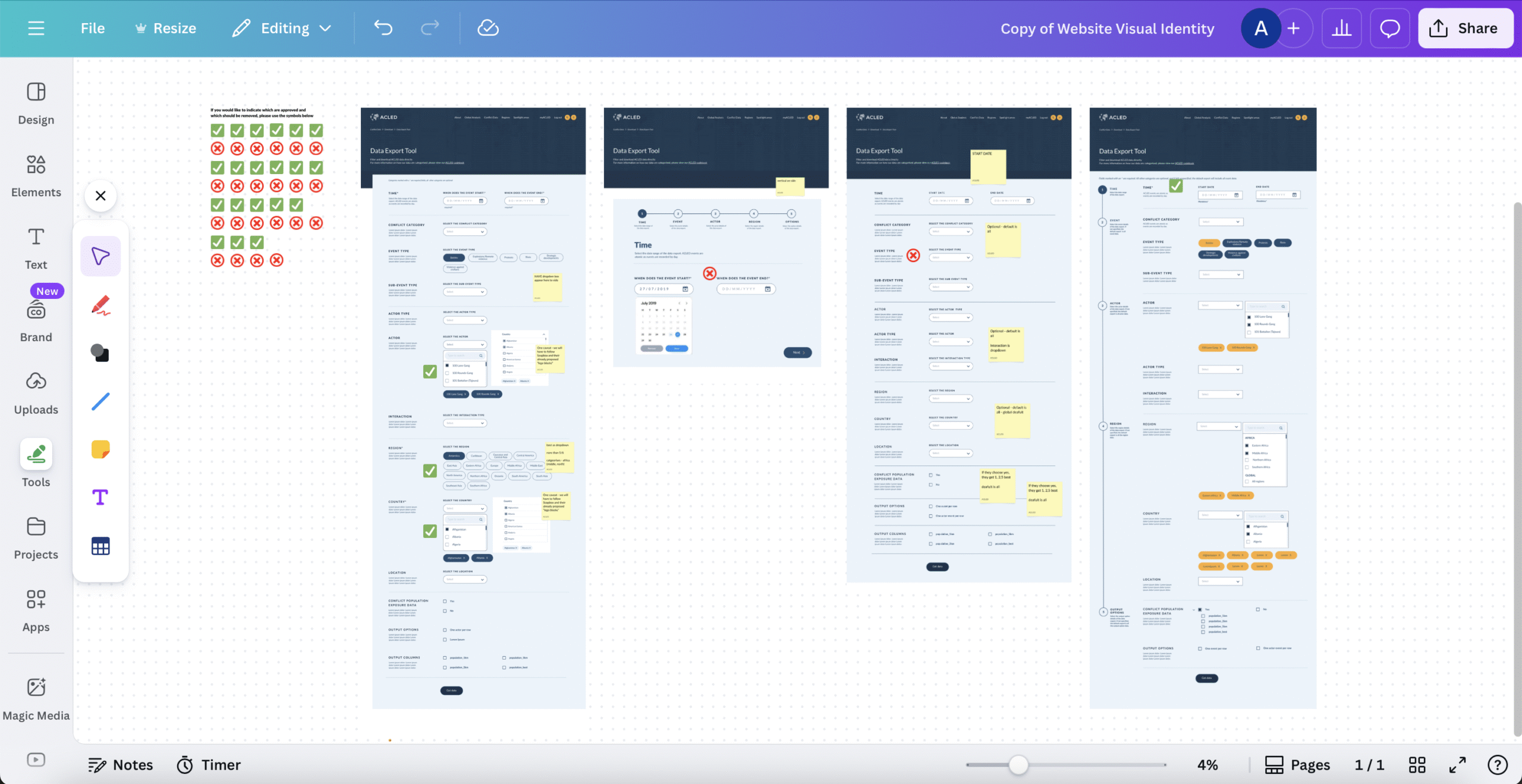
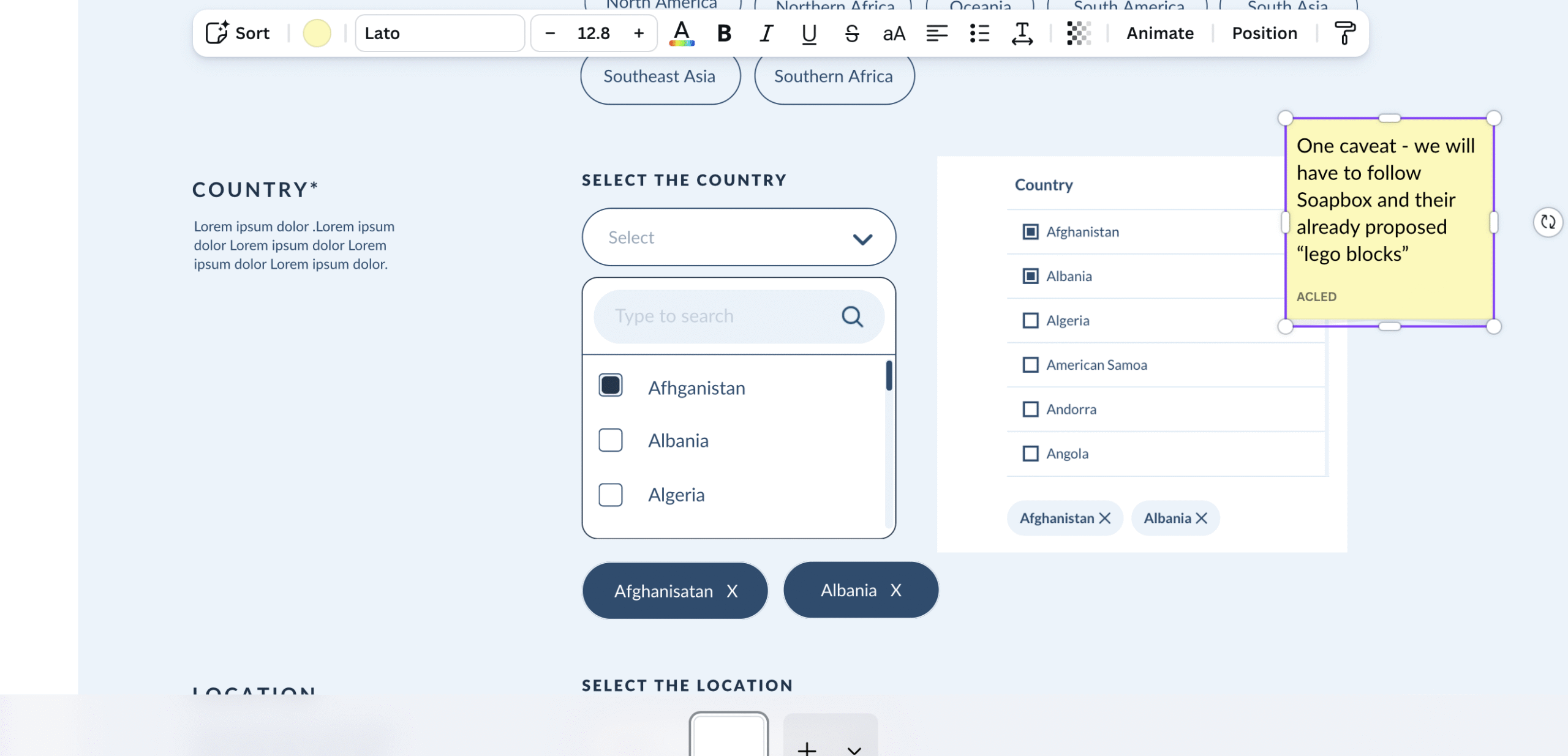
The requirements gathered from both ACLED and Soapbox were synthesized, resulting in the development of three iterations of the Data Export Tool. Each iteration explored different approaches to improving usability and reducing cognitive load. To make the experience more intuitive, later iterations introduced a gamified progression bar, alongside filters and suggested topic bubbles that acted as prompts for users. These elements reduced the need for guesswork by guiding users through the process and pre-emptively supporting decision-making. The gamified progression bar was informed by UI/UX best practices for instructional completion, using clear visual metaphors to enhance engagement and motivation. Rather than relying on a simple percentage indicator, the progression bar was designed to communicate a sense of progress and accomplishment through visually meaningful stages. Descriptive text and contextual instructions were placed alongside the interface to further guide users as they moved through each step of the export process. Three design iterations were developed: Iteration one: A longer, single-page form without a progression bar Iteration two: A single-page form enhanced with a gamified progression bar and suggested prompts Iteration three: A page-by-page flow with progress divided across multiple steps These iterations were presented to the ACLED stakeholder, Clionadh, during a workshop. Based on feedback and discussion, the second iteration—featuring the progression bar and prompts—was selected as the preferred direction.
Design refinement
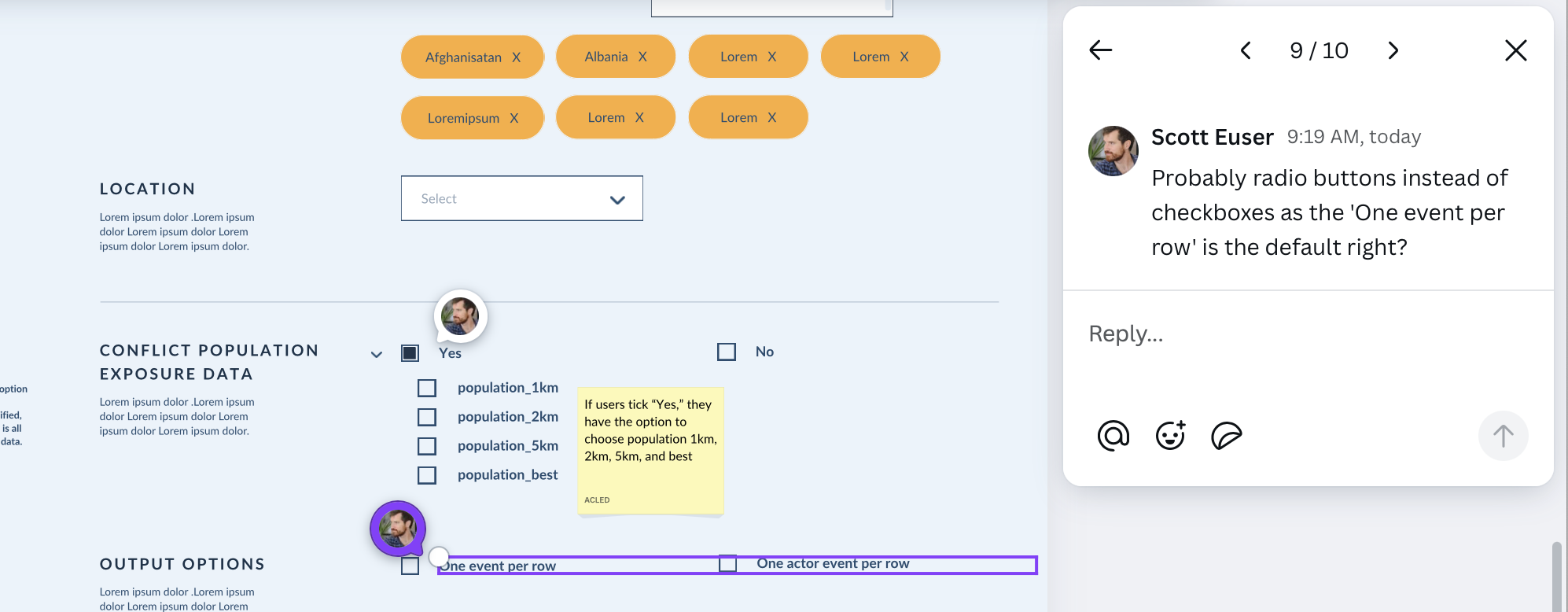
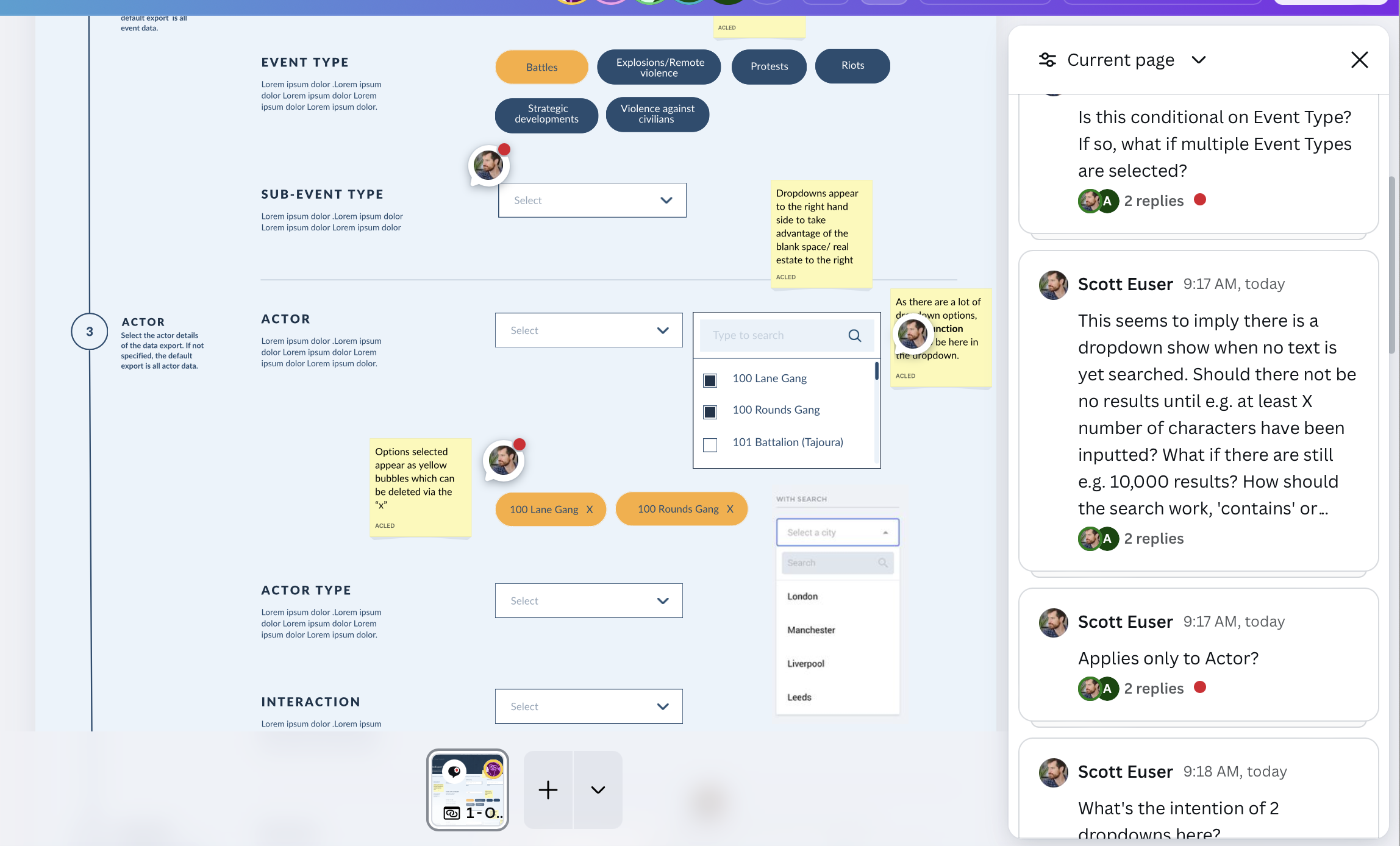
At this stage of the project, I liaised closely with Soapbox, the design agency, acting as a bridge between them and ACLED’s cross-functional teams. My role focused on clearly communicating the needs and priorities of stakeholders across data, technology, multimedia, and leadership, ensuring that design decisions reflected both user needs and organizational requirements.
Drupal (back-end) design integration
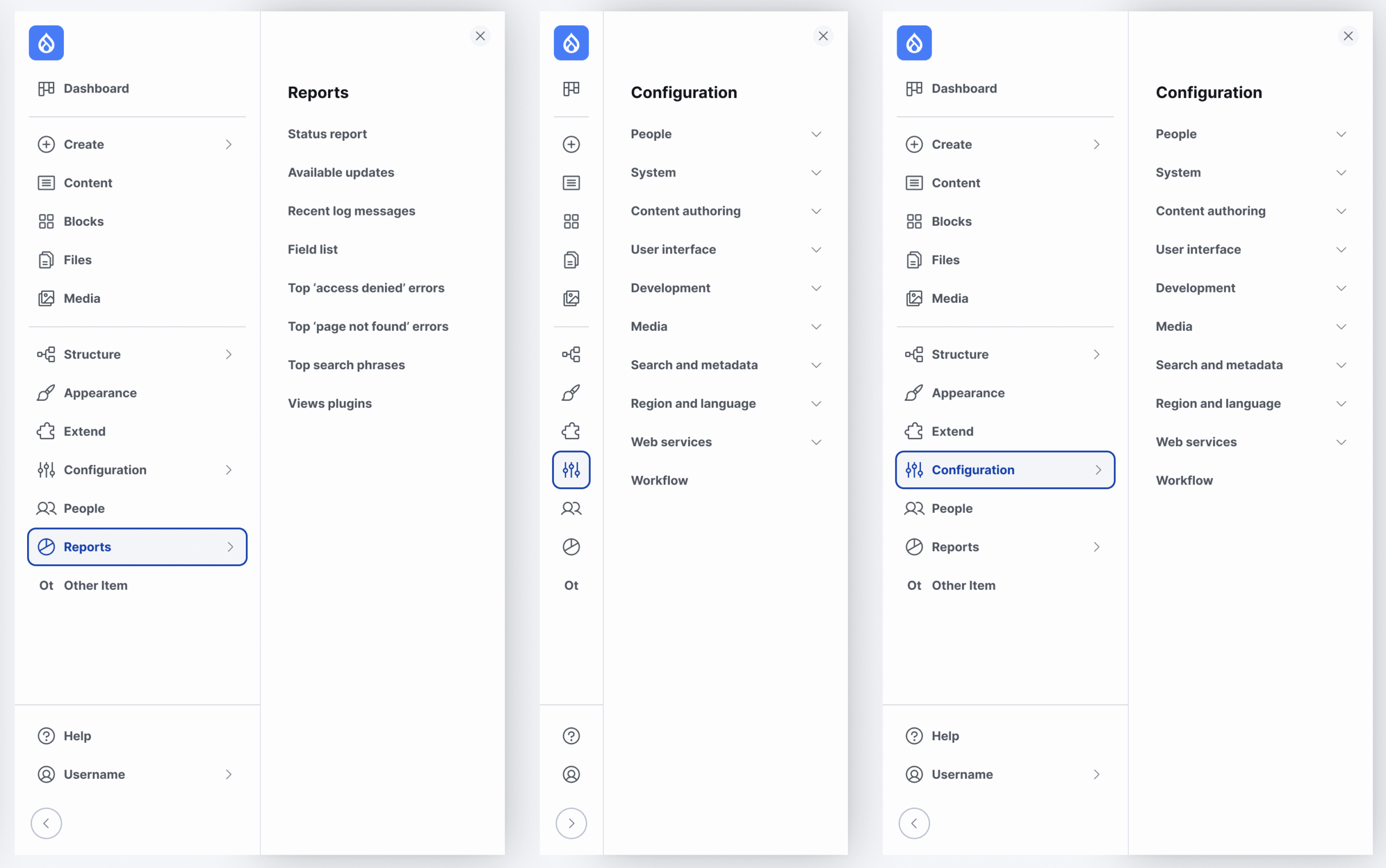
The website was built and deployed on Drupal, a robust open-source content management system widely used by large organizations, governments, NGOs, and research institutions. Drupal was selected for its flexibility, scalability, and modular architecture, which aligned with ACLED’s operational needs and long-term maintenance strategy. Using Drupal’s content and media management features, my team and I were able to efficiently maintain and update banners, images, and multimedia assets without additional development support.